
freelance video editor
Uncategorized

The Line We Shouldn’t Cross: Dark Patterns in Digital Marketing

Introduction: When Persuasion Turns Into Manipulation Dark Patterns in Digital Marketing Digital marketing thrives on persuasion. Every headline, call-to-action button, and pricing display aims to guide a visitor toward a decision. However, a troubling line exists between ethical persuasion and outright manipulation. Dark patterns in digital marketing occupy this uncomfortable space, where design choices deliberately mislead users into actions they might not otherwise take. Consequently, understanding dark patterns has become essential for both marketers and consumers. While businesses naturally want to increase conversions, sustainable growth depends on trust rather than trickery. Therefore, this article examines how dark patterns operate, why they proliferate, and how ethical marketers can avoid crossing the line from persuasion into manipulation. Defining Dark Patterns and Their Origins Dark patterns refer to interface designs or messaging strategies intentionally crafted to deceive users into performing actions that benefit the business rather than the customer. The term originated within user experience design circles, where researchers began documenting manipulative tactics across websites and applications. Since then, the concept has expanded into broader marketing contexts. Importantly, dark patterns differ from legitimate persuasive techniques because they rely on deception rather than genuine value. For example, a countdown timer displaying a real, time-limited discount represents ethical urgency. However, a fake countdown timer that resets every time a user revisits the page constitutes a dark pattern, since it manufactures false urgency to pressure a purchase decision. Common Types of Dark Patterns in Online Advertising Several recognizable dark patterns appear repeatedly across digital marketing campaigns. Confirmshaming, for instance, occurs when a website guilt-trips users who attempt to decline an offer, displaying phrases such as “No thanks, I don’t want to save money.” This tactic manipulates emotion rather than presenting a genuine choice. Similarly, hidden costs represent another widespread dark pattern, where additional fees appear only during the final checkout stage, after a customer has already invested time in the purchasing process. Bait-and-switch advertising follows a comparable logic, luring customers with attractive offers that disappear or change once they engage further. In each case, the underlying strategy exploits psychological commitment rather than delivering honest value. The Subscription Trap and Difficult Cancellations Among the most notorious dark patterns, subscription traps deserve particular attention. Many companies design sign-up processes to be remarkably simple, often requiring just one click. Cancellation processes, however, frequently involve multiple steps, hidden menus, or mandatory phone calls, deliberately increasing friction to discourage users from leaving. This asymmetry between easy entry and difficult exit represents a calculated manipulation strategy. Furthermore, some businesses bury cancellation options deep within account settings or require customers to navigate through several persuasive retention offers before completing the process. As a result, frustrated customers often abandon their cancellation attempt entirely, generating revenue through obstruction rather than satisfaction. Social Proof Manipulation and Fake Urgency Legitimate social proof, such as genuine customer reviews, builds trust effectively. However, dark patterns often exploit this concept through fabricated testimonials, inflated view counts, or fake notifications claiming that other customers recently purchased a product. These manufactured signals create false impressions of popularity and demand. Additionally, fake urgency compounds this manipulation further. Messages claiming “Only 2 items left in stock” or “47 people are viewing this right now” frequently rely on randomly generated numbers rather than actual inventory or traffic data. Consequently, customers make purchasing decisions based on fabricated scarcity, believing they must act immediately when no genuine urgency actually exists. Misleading Design and Visual Manipulation Visual design itself can become a tool for manipulation when marketers intentionally obscure important information. For instance, some websites display “Accept” buttons in bright, prominent colors while hiding “Decline” or “No thanks” options in small, low-contrast text. This design choice exploits natural visual attention patterns to nudge users toward the business’s preferred outcome. Moreover, pre-checked boxes represent another common visual manipulation, automatically opting users into newsletters, add-on purchases, or data-sharing agreements unless they actively notice and uncheck the option. Because many users skim quickly through forms, they often fail to notice these pre-selected choices, inadvertently agreeing to terms they never intended to accept. Why Businesses Turn to Dark Patterns Understanding why dark patterns persist requires examining the short-term incentives driving their adoption. In competitive digital markets, businesses often face intense pressure to hit conversion targets quickly. Dark patterns offer a seemingly effective shortcut, generating immediate results without requiring genuine improvements to product quality or customer experience. However, this approach frequently backfires over time. While dark patterns may boost short-term metrics, they simultaneously erode customer trust and damage brand reputation. Consequently, businesses relying heavily on manipulation often experience higher customer churn, increased complaints, and negative reviews that ultimately outweigh any initial conversion gains. The Legal and Ethical Consequences of Manipulation Regulatory bodies worldwide have begun addressing dark patterns more aggressively in recent years. Various consumer protection laws now explicitly prohibit certain manipulative practices, particularly regarding subscription cancellations and hidden fees. Therefore, businesses employing dark patterns face growing legal risk alongside reputational damage. Beyond legal considerations, ethical responsibility should guide marketing decisions independently of regulation. Marketers who prioritize long-term relationships over short-term manipulation build sustainable businesses grounded in genuine customer satisfaction. As awareness of dark patterns increases among consumers, transparency increasingly becomes a competitive advantage rather than merely an ethical obligation. Building Ethical Alternatives to Dark Patterns Fortunately, ethical marketing alternatives exist for nearly every dark pattern discussed throughout this article. Instead of fake urgency, marketers can highlight genuine limited-time offers with accurate, verifiable details. Similarly, instead of confirmshaming, businesses can present opt-out options respectfully, without guilt-inducing language. Furthermore, simplifying cancellation processes to match the ease of sign-up demonstrates genuine confidence in a product’s value. When customers know they can leave easily, yet choose to stay, this loyalty reflects authentic satisfaction rather than forced retention. Consequently, businesses that adopt these ethical alternatives often cultivate stronger brand loyalty and more sustainable growth over time. Conclusion: Choosing Trust Over Trickery Ultimately, dark patterns in digital marketing represent a tempting but dangerous shortcut toward short-term gains. While manipulation may occasionally boost immediate conversion numbers, it consistently
Uncategorized

Inside the Click: Decoding the Psychology Behind Why People Click Ads

Introduction: The Hidden Science of a Single Click Why People Click Ads Every day, millions of people scroll past countless advertisements, yet only a fraction of those ads receive a click. This raises an important question for marketers: what actually drives someone to stop scrolling and engage? Understanding the psychology behind why people click ads reveals that decisions are rarely random. Instead, they stem from deep-rooted cognitive patterns, emotional triggers, and subconscious biases that marketers can learn to identify and apply. Consequently, businesses that grasp these psychological principles gain a significant advantage over competitors who rely solely on guesswork. Rather than assuming that a click depends purely on discount offers or flashy visuals, successful marketers study human behavior closely. As a result, they design campaigns that align with how the brain naturally processes information, ultimately increasing engagement and conversion rates. The Role of Curiosity in Driving Engagement Curiosity remains one of the most powerful psychological forces influencing ad clicks. When an advertisement presents an incomplete story or an intriguing question, the human brain experiences discomfort until it resolves that gap in knowledge. This phenomenon, often called the “curiosity gap,” compels users to click simply to satisfy their need for closure. For instance, headlines that hint at surprising results without revealing them outright tend to outperform straightforward, fully descriptive ones. However, marketers must exercise caution here, since exploiting curiosity without delivering genuine value afterward damages trust. Therefore, the most effective campaigns balance curiosity with honesty, ensuring that the clicked content fulfills the promise made in the ad itself. Emotional Triggers and Their Persuasive Power Beyond curiosity, emotions play a central role in shaping consumer behavior. Ads that evoke happiness, fear, nostalgia, or urgency tend to generate stronger reactions than those relying purely on logic. This occurs because emotional processing in the brain often precedes rational thought, meaning that people frequently click before consciously analyzing the offer. Fear of missing out, commonly abbreviated as FOMO, exemplifies this principle particularly well. When an advertisement suggests limited availability or a closing deadline, viewers experience anxiety about losing an opportunity. Consequently, they act quickly, often clicking before fully evaluating whether the product or service actually suits their needs. Marketers who understand this dynamic can craft messaging that respectfully leverages urgency without resorting to manipulation. Social Proof and the Influence of Group Behavior Humans are inherently social creatures, and this tendency extends directly into online behavior. When people see that others have purchased, reviewed, or engaged with a product, they feel reassured about its legitimacy. This concept, known as social proof, significantly increases the likelihood of clicking an advertisement. Testimonials, star ratings, and phrases such as “thousands of satisfied customers” all serve this psychological function. Moreover, social proof reduces perceived risk, since potential buyers assume that widespread approval indicates quality. As a result, advertisements that visibly showcase popularity or community endorsement often outperform those that rely solely on the brand’s own claims about its product. The Power of Visual Attention and Design While psychology largely operates beneath conscious awareness, visual design still plays a critical role in capturing initial attention. Bright colors, contrasting elements, and strategically placed images naturally draw the eye before any text registers in the viewer’s mind. Therefore, the first psychological battle occurs at the visual level, long before the message itself gets processed. Additionally, human faces within advertisements tend to increase engagement because the brain is wired to prioritize facial recognition. Similarly, movement and animation capture attention more effectively than static images, since the visual cortex responds strongly to motion. Consequently, marketers who combine compelling visuals with psychologically sound messaging create advertisements that succeed on multiple cognitive levels simultaneously. Personalization and the Feeling of Relevance People respond far more positively to advertisements that feel personally relevant to their lives. When an ad addresses a specific pain point, interest, or demographic characteristic, viewers perceive it as speaking directly to them. This personal relevance activates a psychological principle known as selective attention, wherein the brain filters out irrelevant information while amplifying content that seems personally applicable. Furthermore, data-driven personalization, such as retargeting ads based on previous browsing behavior, reinforces this effect even further. Because the advertisement reflects genuine interest already demonstrated by the viewer, it feels less intrusive and more helpful. Consequently, personalized ads generate higher click-through rates than generic advertisements distributed broadly without any consideration of audience-specific needs. The Impact of Cognitive Ease on Decision-Making Psychologists have long studied a concept called cognitive ease, which refers to how effortlessly the brain processes information. Advertisements that communicate their message clearly and simply tend to perform better than those requiring significant mental effort to understand. This occurs because the brain naturally gravitates toward information that feels familiar, easy, and quickly digestible. Consequently, marketers should avoid cluttered layouts, complicated language, or excessive information within a single advertisement. Instead, clear headlines, concise copy, and straightforward calls to action reduce cognitive strain and increase the likelihood of a click. As digital attention spans continue to shrink, this principle becomes increasingly important for capturing engagement within just a few seconds. Reciprocity and the Promise of Value Another psychological principle influencing ad clicks involves reciprocity, the human tendency to feel obligated to return a favor when something valuable is offered first. Advertisements that promise free guides, discounts, or exclusive content tap directly into this instinct. When viewers perceive that they stand to gain something without immediate cost, they feel compelled to reciprocate through engagement, often in the form of a click. Moreover, this principle explains why lead magnets and free trials remain so effective across countless industries. By offering value upfront, businesses lower the psychological barrier to entry, making the initial click feel like a low-risk decision rather than a commitment. Therefore, marketers who prioritize generosity within their advertising strategy often see stronger long-term engagement and customer loyalty. Trust Signals and the Reduction of Perceived Risk Finally, trust plays an undeniable role in determining whether someone clicks an advertisement. Recognizable logos, secure payment icons, and professional design elements all

Uncategorized

The Invisible Brand: How to Master Marketing Without Showing Your Face

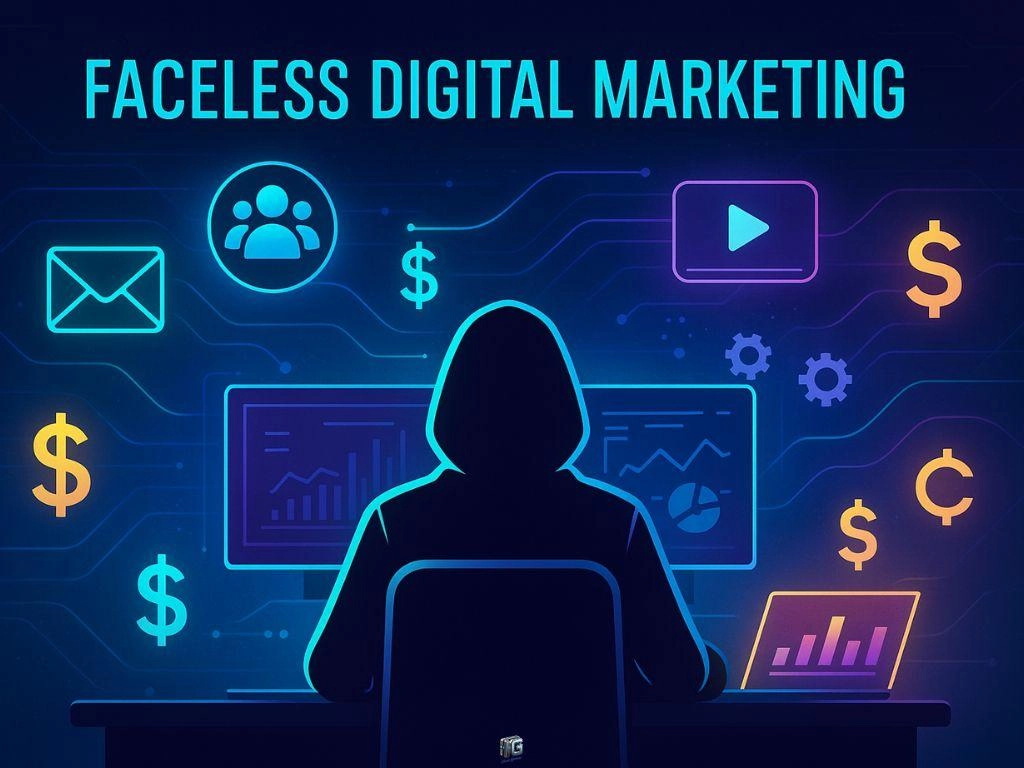
Introduction: Why Faceless Marketing Deserves Your Attention Every entrepreneur eventually confronts a critical question: does building a brand require stepping in front of the camera? For years, marketing experts insisted that personal visibility was the only path to trust and growth. However, this assumption no longer holds true. Consequently, thousands of business owners now practice marketing without showing your face, and many of them achieve remarkable results. This shift matters because not everyone feels comfortable on camera. Some people experience genuine anxiety when recording videos, while others simply prefer to keep their personal identity separate from their business. Regardless of the reason, faceless marketing offers a legitimate, effective alternative. Moreover, it allows introverted entrepreneurs, privacy-conscious professionals, and even camera-shy beginners to build thriving brands without compromising their comfort. Understanding the Concept of Faceless Branding Faceless branding refers to a marketing approach where a business builds recognition, trust, and engagement without relying on the founder’s physical appearance. Instead of personal videos or selfie-style content, the brand uses logos, animations, text overlays, voiceovers, and consistent visual themes to communicate its message. As a result, the audience connects with the brand’s identity rather than an individual’s face. This approach differs significantly from traditional influencer marketing, where the creator’s personality drives engagement. Faceless branding, on the other hand, shifts the spotlight onto the product, the story, or the value being offered. Therefore, businesses that adopt this model often develop a distinct visual language, a recognizable tone of voice, and a consistent aesthetic that audiences learn to associate with quality and reliability. The Psychological Benefits of Staying Behind the Scenes Choosing to market a business without appearing on camera can reduce stress considerably. Many entrepreneurs report feeling overwhelmed by the pressure to perform, look presentable, and speak confidently in every video. By removing this requirement, faceless marketing allows creators to focus entirely on their message rather than their appearance. Additionally, this method protects personal privacy in an increasingly public digital world. Business owners who value separation between their personal and professional lives find comfort in knowing that their face will not become permanently associated with their brand online. Consequently, they can pivot, rebrand, or even sell their business later without personal identity constraints holding them back. Practical Strategies for Marketing Without Showing Your Face Several proven techniques allow businesses to thrive using faceless content. First, text-based posts and carousel graphics communicate valuable information while relying entirely on design rather than personal appearance. Tools such as Canva provide templates that simplify this process for beginners. Second, voiceover content works exceptionally well for tutorials, product demonstrations, and storytelling. By narrating over screen recordings or animated visuals, creators can maintain a personal connection with their audience without ever appearing visually. Furthermore, AI-generated voice tools now produce natural-sounding narration, which eliminates the need for expensive recording equipment or professional voice talent. Leveraging Animation and Motion Graphics Animation offers another powerful avenue for faceless marketing. Short animated explainer videos simplify complex ideas while keeping the brand’s identity consistent across platforms. Because animated characters or mascots can represent the business, audiences quickly begin to recognize and trust these visual symbols. In addition, motion graphics enhance engagement rates significantly compared to static images. Platforms such as Instagram and YouTube reward dynamic content with higher visibility in their algorithms. Therefore, investing time in learning basic animation tools, or hiring a freelance animator, often yields a strong return on investment for faceless brands seeking sustainable growth. Building Trust Without Personal Visibility Skeptics often argue that audiences cannot trust a brand without seeing the person behind it. Nevertheless, trust can be built through consistency, transparency, and value delivery rather than personal exposure. When a brand consistently posts helpful, accurate, and well-designed content, audiences begin associating that reliability with the brand itself. Testimonials, case studies, and behind-the-scenes glimpses of the work process further reinforce credibility. For instance, sharing before-and-after results, client feedback, or process breakdowns demonstrates competence without requiring a founder’s face. As a result, potential customers judge the brand based on outcomes rather than personality, which often leads to more objective purchasing decisions. Choosing the Right Platforms for Faceless Content Not every social media platform suits faceless marketing equally well. Pinterest, for example, thrives on visual boards and infographics, making it an excellent choice for businesses that rely on design-driven content. Similarly, blogs and written newsletters allow brands to establish authority purely through knowledge and expertise. On the other hand, platforms like TikTok and Instagram Reels, which traditionally favor personality-driven content, still accommodate faceless creators through trending audio, text overlays, and voiceover storytelling. Therefore, business owners should experiment across multiple platforms to identify where their specific faceless content format performs best, rather than assuming one platform fits all strategies universally. Common Mistakes to Avoid in Faceless Campaigns Despite its advantages, faceless marketing carries certain pitfalls that beginners frequently encounter. One common mistake involves inconsistent branding, where fonts, colors, and tone shift unpredictably across posts. This inconsistency confuses audiences and weakens brand recall over time. Another frequent error involves neglecting emotional connection. Because faceless brands lack a visible human presence, they must compensate through storytelling, relatable captions, and authentic voice. Without this emotional layer, content can feel sterile or corporate, which ultimately reduces engagement. Therefore, creators must intentionally inject warmth and personality into their writing, even when their face remains absent from the screen. Tools That Simplify Marketing Without Showing Your Face Fortunately, numerous tools now exist specifically to support faceless content creators. Canva remains a favorite for designing graphics, while CapCut offers accessible video editing features, including text animation and voiceover syncing. Meanwhile, AI voice generators such as ElevenLabs allow creators to produce professional narration without recording their own voice. Furthermore, stock footage libraries and royalty-free music platforms help creators assemble polished videos entirely from pre-existing assets. By combining these tools strategically, even beginners with minimal technical skill can produce professional-quality content. Consequently, the barrier to entry for faceless marketing continues to decrease, making it accessible to virtually any business owner willing to learn.

Scroll to Top